ServicesWater testing
Water Testing in Lancaster, TX
Before you buy a filter, find out what is actually in your water. We test your home's water, explain the results in plain language and tell you honestly whether you need anything at all. After a storm, a flood or a pipe repair, testing is a sensible first step.
Test first, then decide
Most city water in North Texas leaves the treatment plant meeting state and federal standards. What changes it is the trip through your pipes, your water heater and any fixtures that have aged or been disturbed. A test tells you what is coming out of your tap, not what was measured miles away.
Many of our calls come after something sudden: a hard freeze that split a line, floodwater near a private well, a main break down the street, or a plumbing repair that left the water cloudy or rust-tinted. Those are the moments when guessing is the wrong move. Testing gives you facts to act on, whether the answer is a simple flush, a filter or nothing.
We also test for everyday questions like chlorine taste, spots on glasses, or whether an older home's plumbing is adding lead. If the numbers say your water is fine, we will tell you that.
What a water test with us includes
- On-site screening
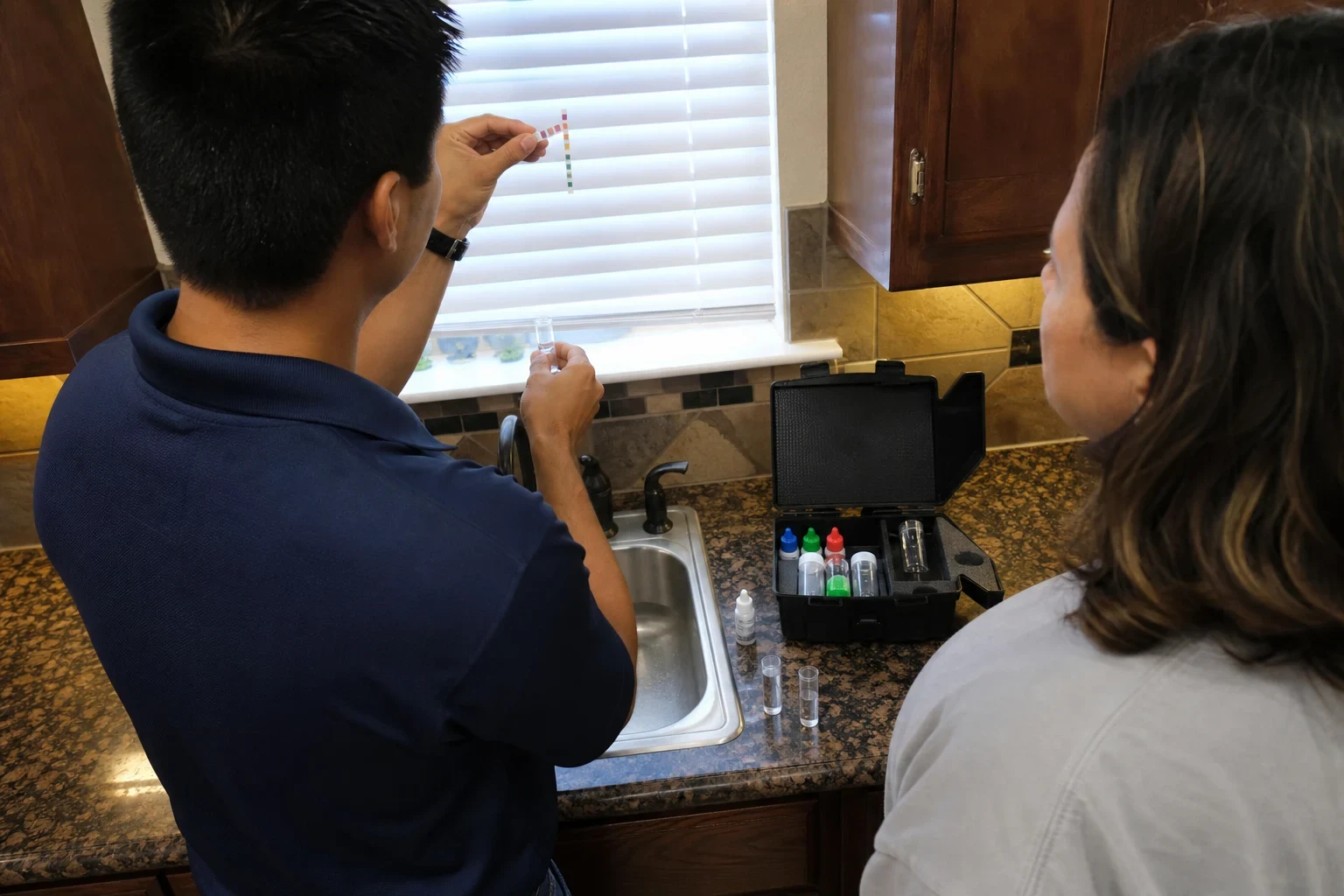
- We check chlorine, hardness, pH, iron and total dissolved solids at your kitchen tap with field test kits. You get a first read before we leave.
- Lab samples when needed
- For lead, bacteria or anything a field kit cannot measure reliably, we collect samples and send them to an independent lab. Collection matters. A sample from the wrong tap or the wrong bottle can give you a misleading result.
- Private well checks
- Wells around Lancaster can take in surface water after heavy rain. We test for coliform bacteria and nitrates, the two things most likely to change after flooding.
- A look at your plumbing
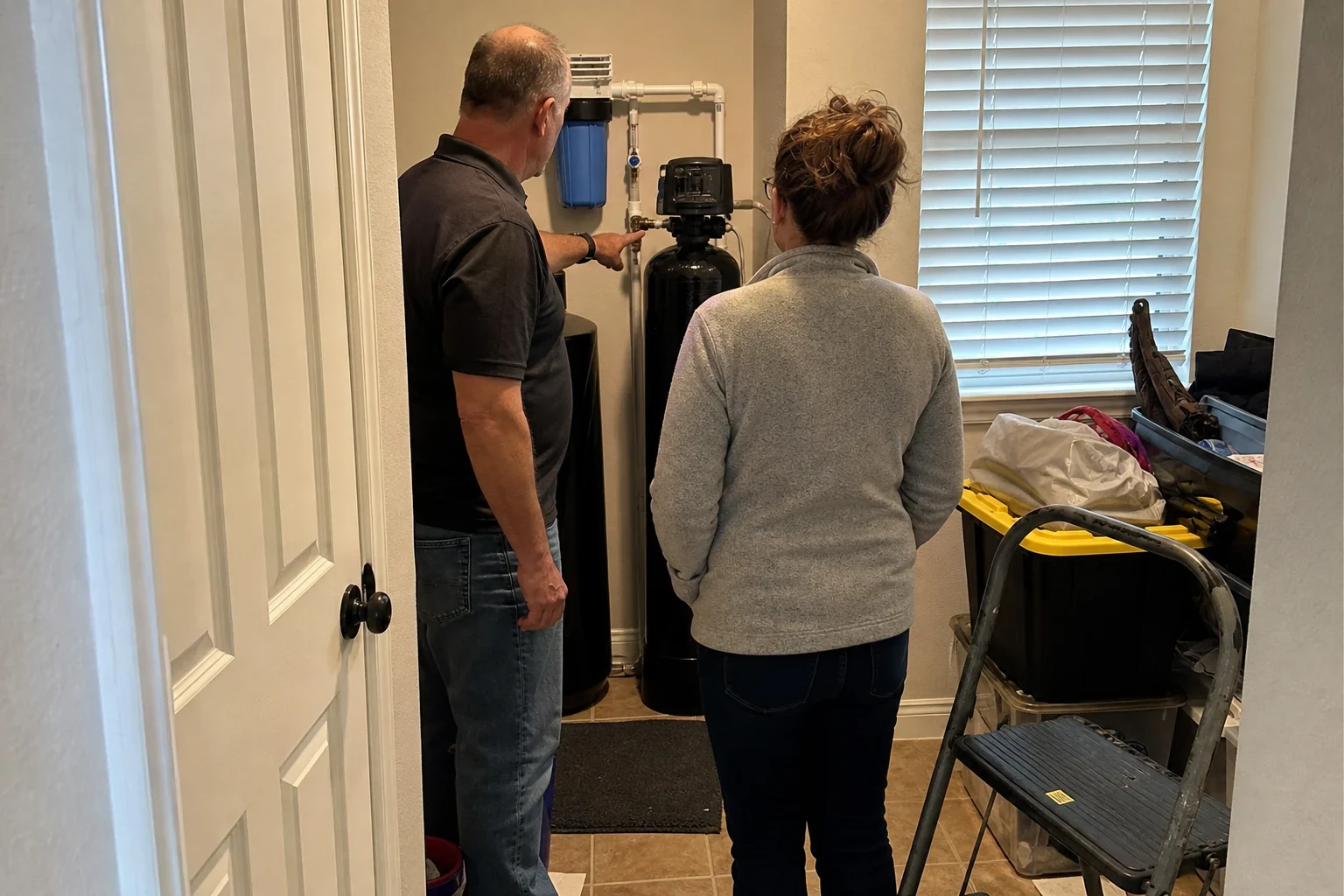
- We note the pipe materials we can see, the age of your water heater and any filters already installed, because those often explain a result.
- Results in writing
- You get the numbers on paper with a plain explanation of what each one means and how it compares with drinking water limits.
- An honest recommendation
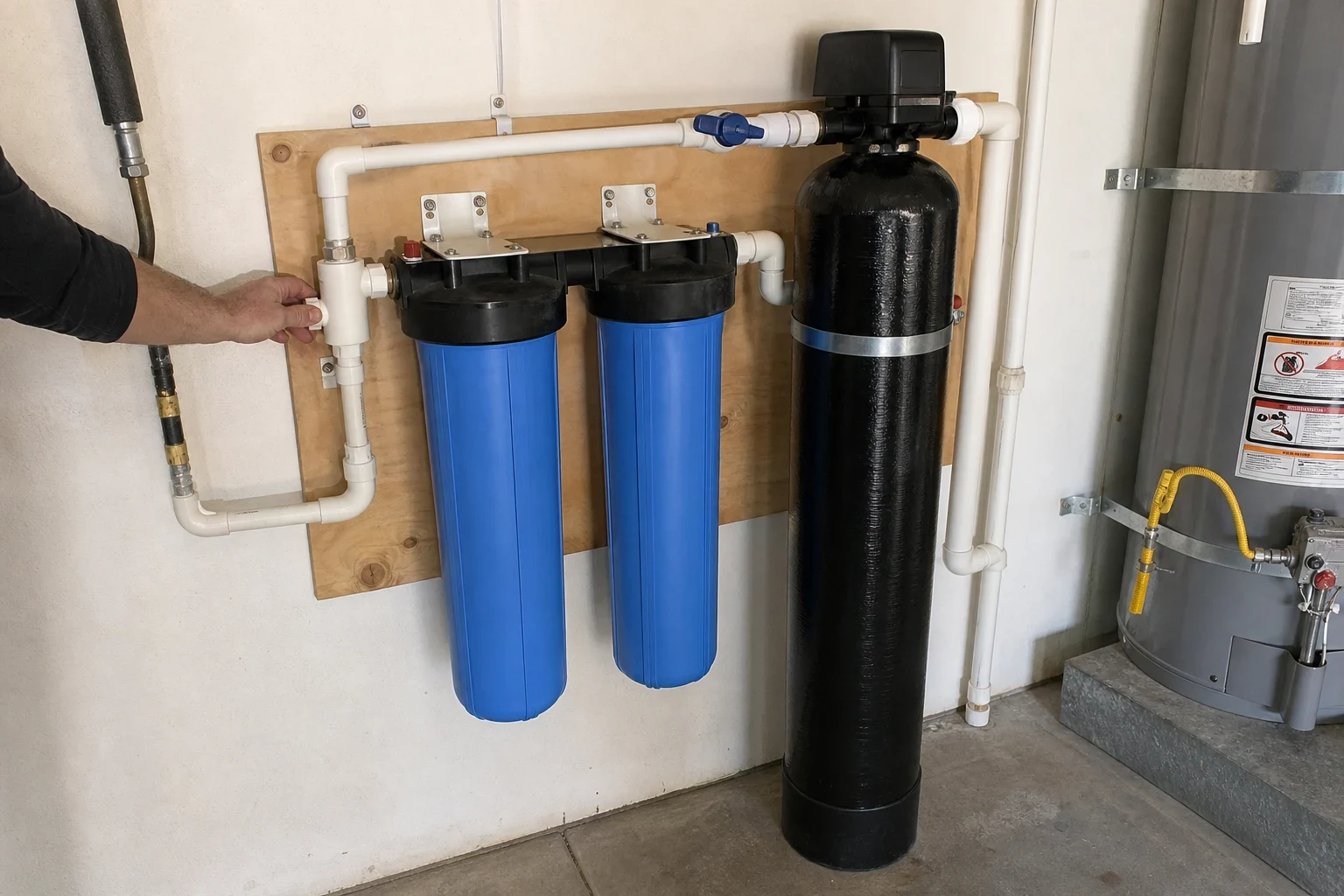
- If something needs treatment, we explain which option fits, such as whole-house carbon filtration for chlorine taste or under-sink reverse osmosis for drinking water. If nothing is needed, we say so.
Signs it is time to test your water
Something changed after a storm
If your water tastes, smells or looks different after heavy rain, a freeze or a power outage, test before you assume it is fine. This matters most on a private well.
Cloudy or rusty water after repairs
Pipe work and main breaks can stir up sediment and iron. Usually it clears with flushing, but a test tells you whether it has.
A chlorine or rotten-egg smell
A strong chlorine smell is common and mostly a taste issue. A sulfur smell can point to your water heater or the water itself, and testing tells the two apart.
An older home with original plumbing
Older solder and fixtures can add lead between the main and your faucet. A lab test is the only way to know.
You are thinking about a softener
Hardness varies more than most people expect. We test before recommending water softeners, so you do not pay for equipment your water does not need.
A boil-water notice just lifted
Your own lines, water heater and filters may still hold old water. Testing confirms everything has flushed through.
How a testing visit works
- 1
Tell us what changed
Describe by phone what you noticed and when it started. We ask a few questions about your plumbing and any recent storm or repair, then set a time that suits you.
- 2
Samples at your tap
We arrive with clean sample bottles and field kits, usually testing at the kitchen sink and one other fixture. There is no plumbing to open up and nothing to move.
- 3
Field results on the spot
We go over the screening numbers with you at the kitchen table, so you know right away whether anything stands out.
- 4
Lab results and a follow-up
When samples go to the lab, we call you once results come back and walk through them together. You keep the written report.
- 5
Next steps, only if needed
If treatment makes sense, we explain the options and what each one costs to own. If your water is fine, the visit ends there.
What affects the cost of water testing
Testing cost depends on what we need to look for. A basic screen for taste or hardness questions is simpler than a full lab panel for a flooded well. We explain the options before taking any samples, and you choose what to test.
- Field screen or lab panel
- Field kits cover the common questions. Lab tests for lead, bacteria or metals add cost because an outside lab runs them.
- City water or private well
- Well water usually needs bacteria and nitrate testing that city water often does not.
- Number of samples
- Testing one tap costs less than comparing several fixtures or checking before and after an existing filter.
- Retesting after a fix
- After a flush, a repair or a new filter, a follow-up test confirms the problem is gone. Some homes need it and some do not.
Water testing questions
Something not covered here? (972) 428-3132
My city water meets standards. Why test at all?
The utility tests water as it leaves the plant and at points in the system. It does not test the pipes, fixtures and water heater inside your home. Most of what changes your water happens in that last stretch.
How long do lab results take?
Field results are ready during the visit. Lab turnaround depends on the test, and bacteria results usually come back sooner than metals. We tell you the expected timing when we collect the samples.
Should we drink the water while we wait on results after a flood?
If floodwater reached your well, use bottled water for drinking and cooking until bacteria results come back clean. On city water, follow any notice from the utility. We do not replace official guidance, but we can tell you what your own tap shows.
Will you try to sell me a system?
No. Many tests end with the answer that your water is fine. When something does need attention, we recommend the smallest fix that solves it, and sometimes that is just filter replacement and maintenance on equipment you already have.
Can I just use a store-bought test kit?
Store strips are fine for a quick check of chlorine or hardness. They cannot measure lead or bacteria reliably, and readings are easy to misjudge. If a strip shows something odd, that is a good reason to get a proper test.
Will insurance cover testing after storm damage?
That depends on your policy. We give you written results and notes on what we found, which you can share with your adjuster. We do not act as the adjuster or decide claims.
Find out what is in your tap
Tell us what you have noticed and we will help you decide what to test. You get real numbers and a straight answer, with no pressure to buy anything.