ServicesFilter replacement and maintenance
Filter Replacement and Maintenance in Lancaster
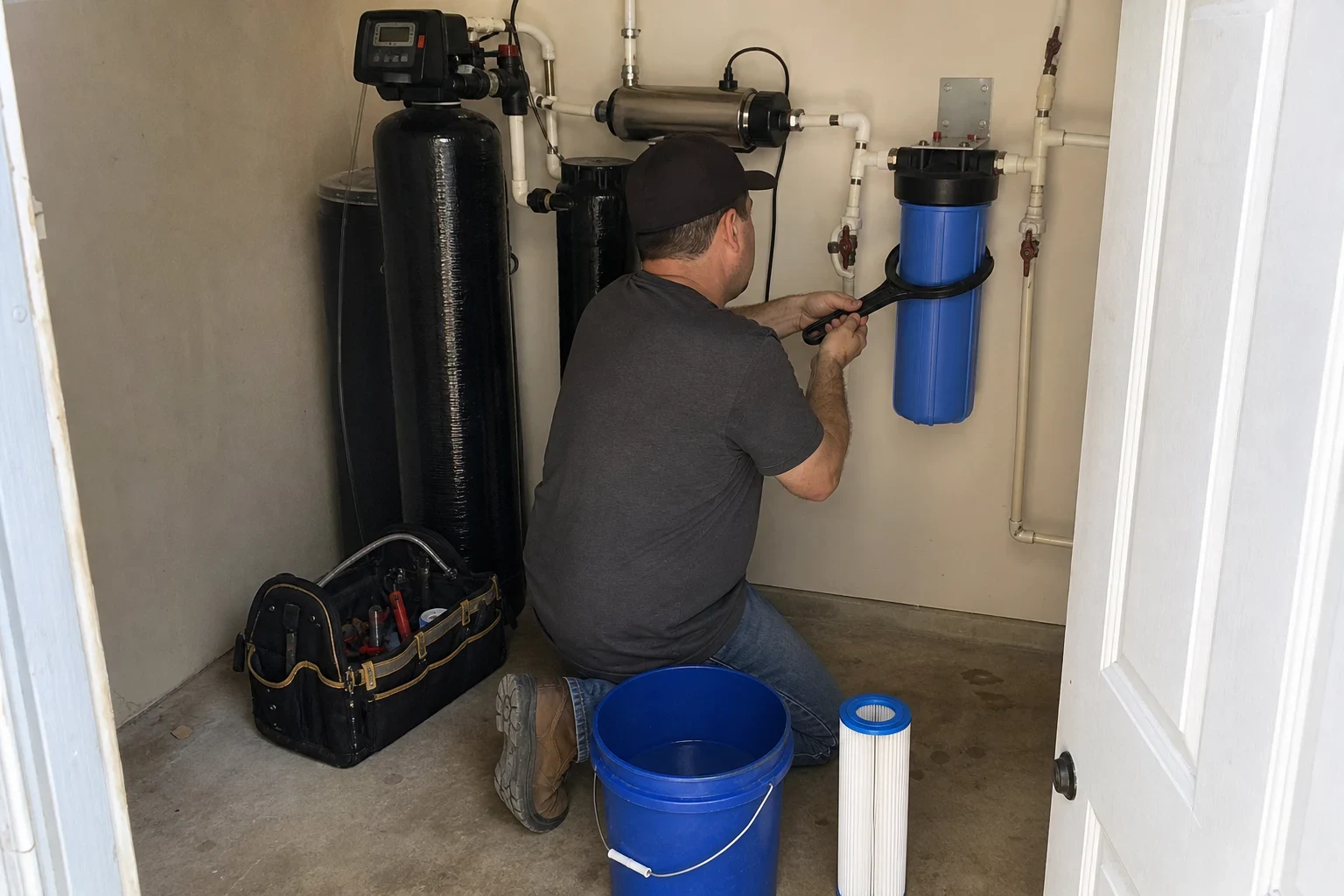
A filter only works while its cartridge has room left to catch things. We replace worn cartridges, clean the housings and check every seal, so your water tastes right again and your system is ready for whatever the next storm season brings.
Keeping the system you already own working
Every cartridge has a limit. Sediment filters slowly pack with grit, carbon runs out of surface to grab chlorine, and a reverse osmosis membrane gradually loses its ability to reject dissolved solids. When that happens, water still comes out of the tap. It just isn't being filtered the way you paid for.
Our filter replacement and maintenance visits cover routine changes on a schedule, plus the checkups that make sense after something unusual. A boil-water notice, a nearby main break or a long power outage can all leave a system with spent or contaminated media. We help you sort out what actually needs replacing and what is fine to leave alone.
What a maintenance visit covers
- Cartridge and media replacement
- We replace sediment, carbon and reverse osmosis prefilters with cartridges that match your housings. If your RO membrane is due, we change it and the post filter at the same time.
- Housing cleaning and sanitizing
- Old cartridges leave slime and grit in the housing bowl. We wash and sanitize each one before the new cartridge goes in, so fresh media isn't sitting in a dirty shell.
- O-ring and seal check
- A dry or flattened O-ring is the most common cause of a slow drip under a sink. We inspect each seal, lubricate it with food-grade silicone and replace any that are cracked or stretched.
- Pressure and flow test
- We check water pressure before and after the filters. A big drop tells us something is clogged or undersized, and we will explain what we see.
- Softener and RO tank check
- If you have a softener, we look at salt level and reset the timer if a power outage knocked it off. For RO systems we check the storage tank's air charge so it fills and dispenses properly.
- Dated labels
- We write the change date on each housing. You will know at a glance when the next swap is due.
Signs your filters are due
Chlorine taste is back
When carbon is used up, the pool smell and flat taste creep back into your glass. That is usually the first thing people notice.
Pressure has dropped
A clogged sediment cartridge chokes flow to the whole house or a single faucet. Showers that used to be strong and now trickle are a common clue.
Your RO faucet runs slowly
A drinking water faucet that takes ages to fill a glass often points to worn prefilters, a tired membrane or a tank that has lost its air charge.
Brown or cloudy water after a storm
Line work and main breaks can stir up sediment that loads a filter in days. If your water looks off after severe weather, the cartridges have likely taken a hit.
You just had a boil-water notice
Carbon and RO media that filtered water during a notice may hold bacteria. Many manufacturers recommend replacing them once the notice is lifted.
You can't remember the last change
If there is no date on the housing and nobody recalls, it is safe to assume the filters are overdue.
What affects the cost
Most maintenance visits are simple and predictable. The price depends mostly on how many cartridges you have and what kind they are. We tell you the cost before we start, and if we find something extra, we explain it and let you decide.
Number of stages and systems
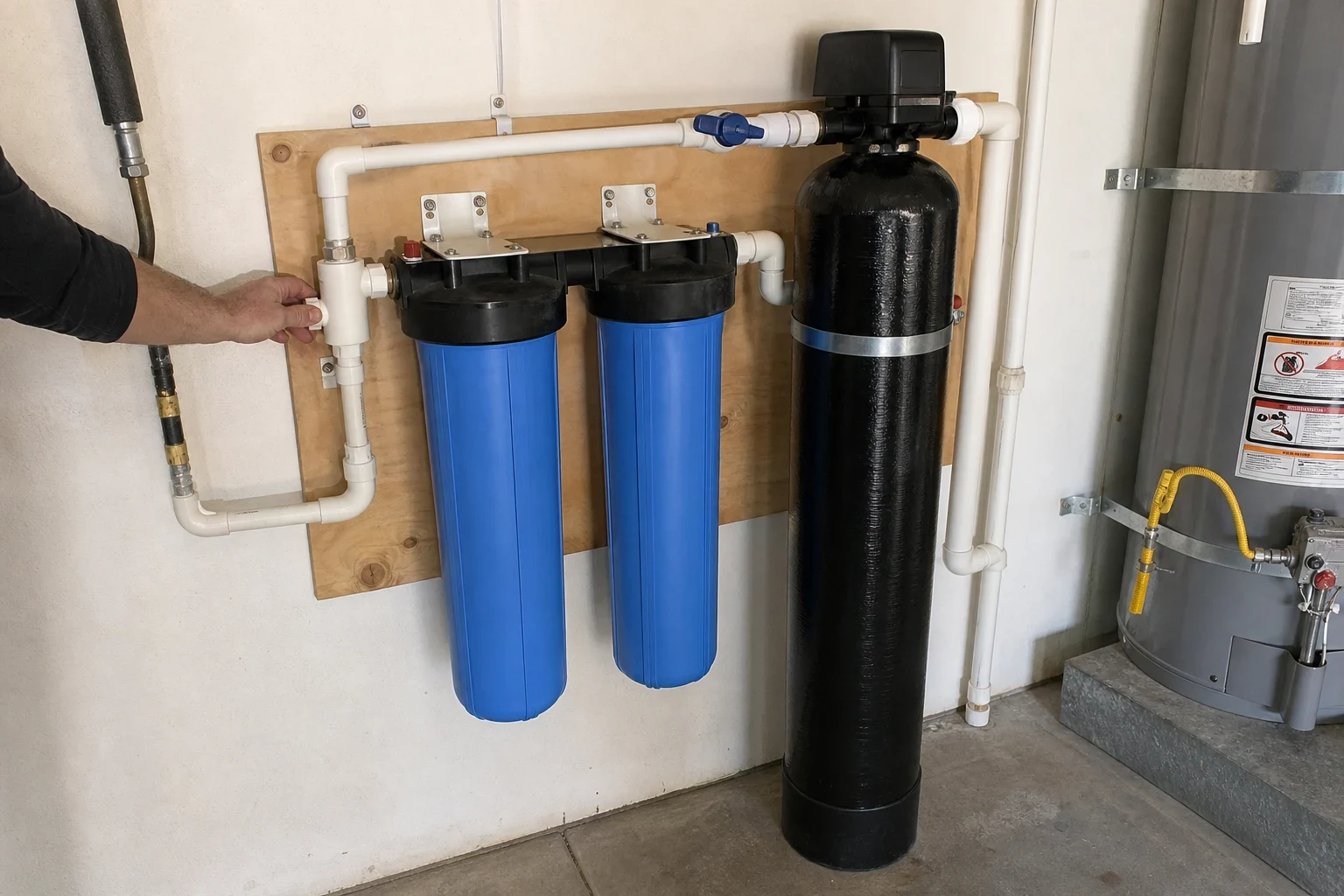
A single whole-house sediment filter is a short job. A home with a whole-house carbon system plus a five-stage RO unit has more parts to change.
Cartridge type and brand
Standard-size sediment cartridges cost less than specialty carbon blocks or proprietary cartridges that only fit one manufacturer's housing.
Membrane replacement
RO membranes last longer than prefilters but cost more when they are due. We test performance first so you replace one only when it needs it.
Condition of the housings
A cracked bowl, a stuck housing or a corroded bypass valve adds parts and time. We show you the problem before replacing anything.
Post-storm sanitizing
After a boil-water notice, a full sanitize and extra flushing take longer than a routine swap, especially on larger systems.
How your visit goes
- 1
A quick phone conversation
You tell us what system you have, and if you can, the brand or a photo of the label. That lets us bring the right cartridges and seals the first time.
- 2
Shut off and relieve pressure
We set the bypass or close the supply valve, release pressure and lay down towels. Housings come off without spraying water across your cabinet or utility area.
- 3
Clean, replace and reseal
Each housing gets washed and sanitized, new cartridges go in, and O-rings are checked and lubricated. We tighten by hand and wrench only as much as the housing calls for.
- 4
Flush and leak check
We bring water back slowly, flush new carbon until it runs clear and watch every joint for drips. Then we test pressure again and compare it to what we found.
- 5
Walk-through and cleanup
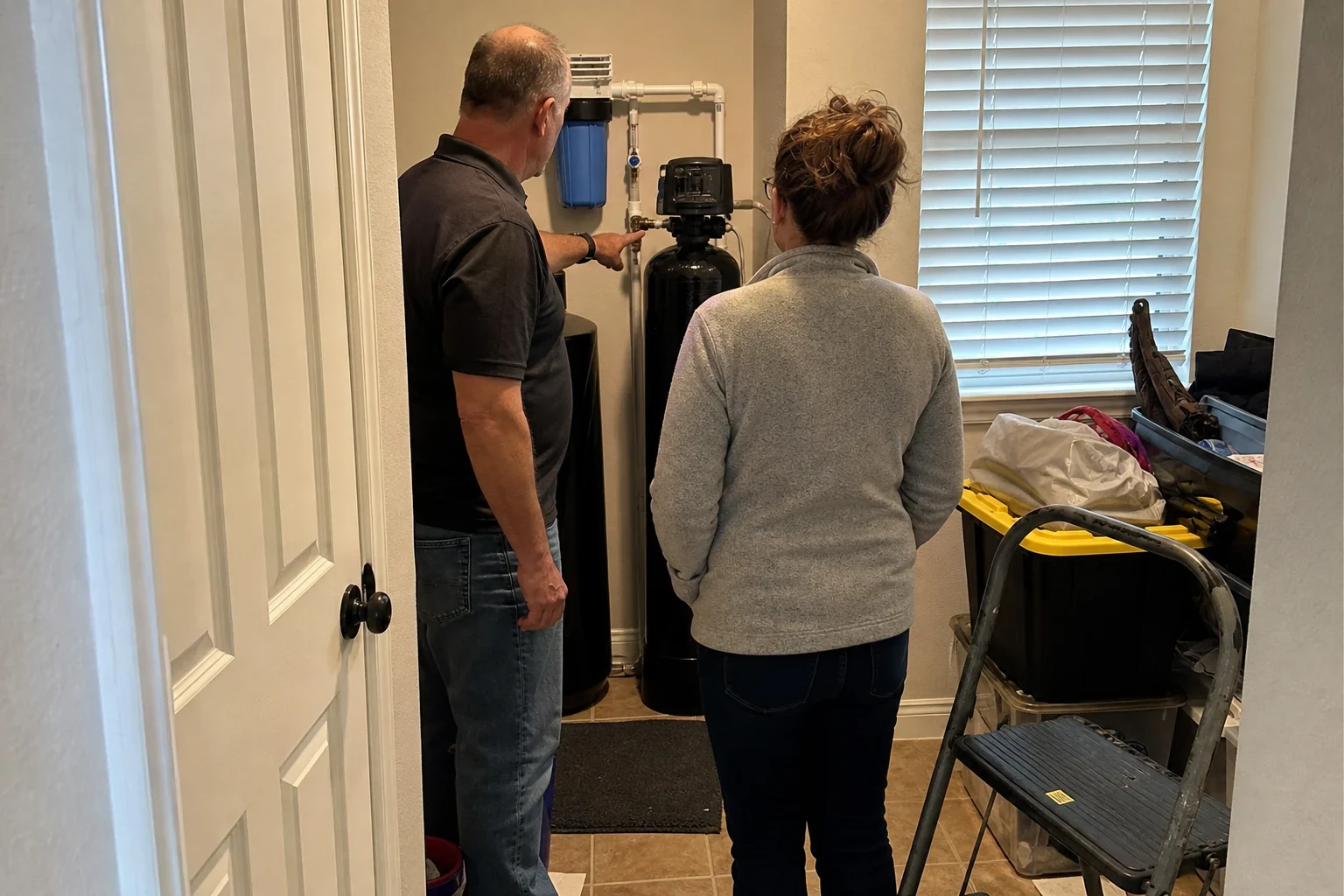
We show you what came out, tell you when the next change is due, and take the old cartridges and packaging with us.
Filter maintenance questions
How often do my filters need changing?
That comes down to the cartridge and how much water your household runs. Sediment and carbon prefilters usually need swapping somewhere between every few months and once a year, while RO membranes go longer. We check your system and how you use it, then give you a schedule that fits instead of a blanket rule.
Are new filters really needed after a boil-water notice?
Usually yes for carbon and RO media that were in use during the notice, because they can hold bacteria. Many manufacturers advise replacing them and sanitizing the housings after the notice lifts. Housings with only sediment filters may just need a cleaning, and we will point out which is which.
Do you work on systems someone else installed?
We do. Most common under-sink and whole-house systems are ones we service. If your system takes a proprietary cartridge, tell us the brand on the phone so we can get the correct parts.
Is it okay to change filters on my own?
Lots of homeowners handle it, and we will gladly show you how while we are there. Where people run into trouble is housings that won't loosen, O-rings that get pinched and skipping the sanitize step. If crawling under the sink isn't for you, we can do it.
Could the filter be why my pressure dropped after a storm?
Quite often. Line repairs can stir up sediment that clogs a cartridge fast. We measure pressure ahead of and after the filters, which shows whether the issue is inside your system or in the supply.
Do you cover towns near Lancaster?
We do. Our filter changes reach Lancaster plus nearby places like DeSoto, Red Oak, Glenn Heights and Cedar Hill. Call us and we will check that your address falls within our area.
Ready for fresh filters?
Tell us what system you have and when the filters were last changed. We'll bring the right parts and leave your water tasting the way it should. If your water seems off and you're not sure why, ask about water testing too.