ServicesWater softeners
Water Softeners in Lancaster After a Hardness Test
Spotty dishes and crusty faucets don't always mean you need a softener. We test your home's water first, explain the result in plain terms, and only recommend a water softener when hardness is actually behind the trouble. If it isn't, we'll tell you what is.
A softener should answer a measured problem
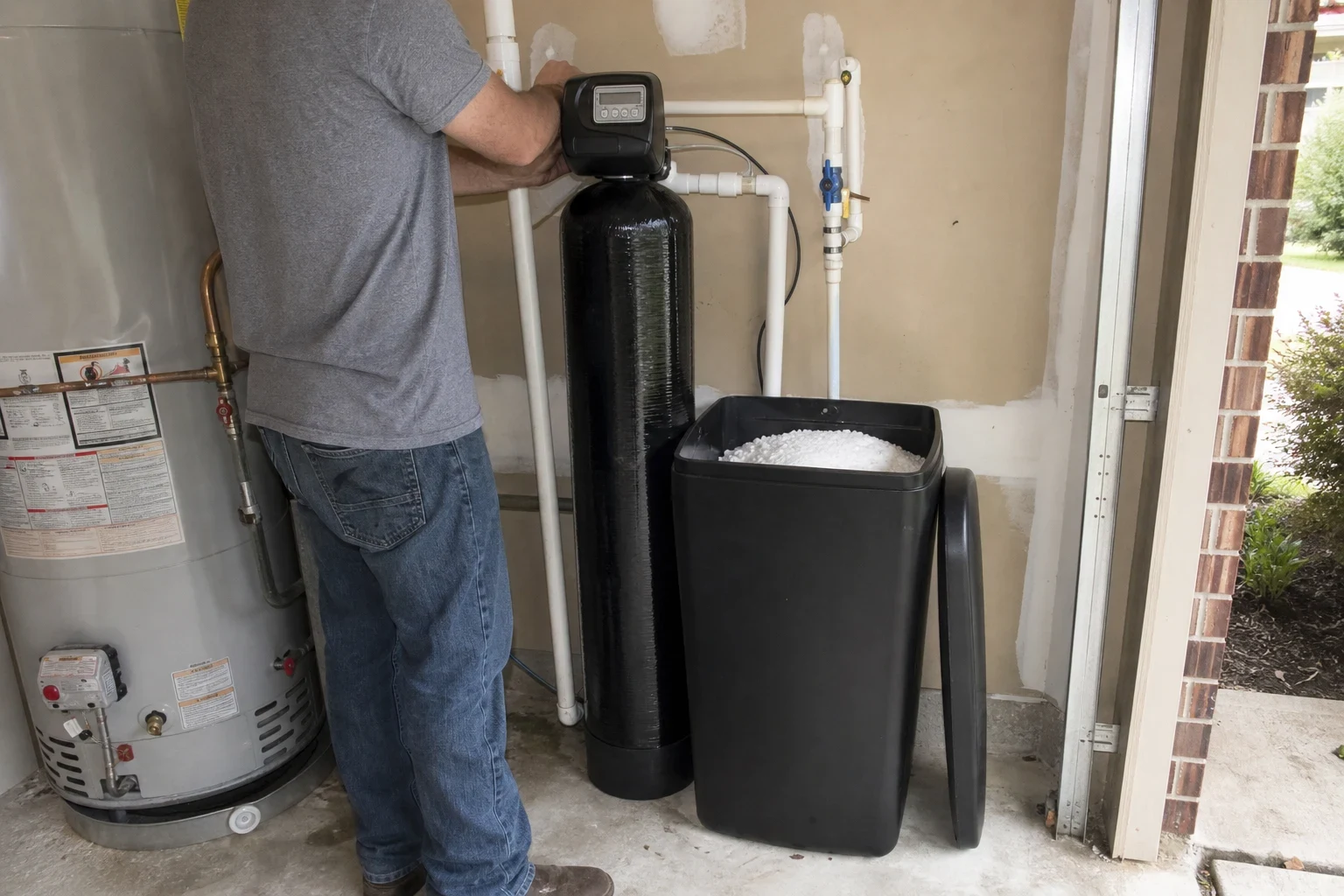
A water softener swaps the calcium and magnesium in your water for sodium or potassium, so scale stops building up in pipes, the water heater and fixtures. It works well when hardness is high. When hardness is modest, it adds salt, upkeep and cost without much payoff, and the spots you're fighting may come from iron, sediment or simple evaporation.
That's why our softener work starts with a hardness test, measured in grains per gallon at your tap. You see the number before anyone talks about equipment. Some homes in Lancaster and nearby towns like DeSoto and Red Oak will clearly benefit. Others are better served by iron and sediment filtration or a whole-house carbon filter, and we'd rather point you there than sell you something you'll resent maintaining.
What our softener service includes
- 01
Hardness and iron readings
We test for hardness and check iron at the same visit, since iron can foul a softener's resin and changes which unit makes sense.
- 02
Sizing from your numbers
We size the unit from your measured hardness and how much water your household uses, so it regenerates on schedule instead of wasting salt and water.
- 03
Placement and bypass valve
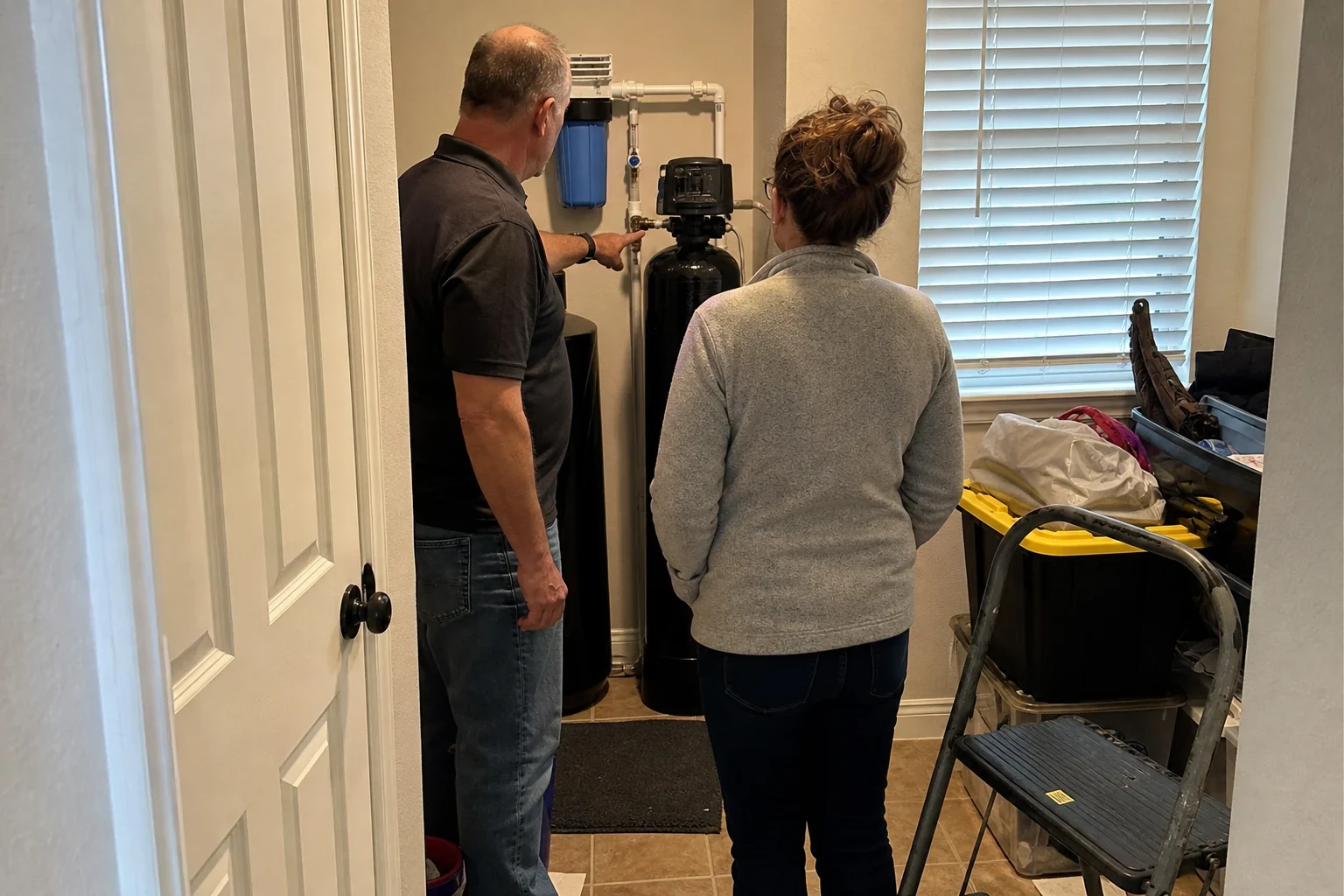
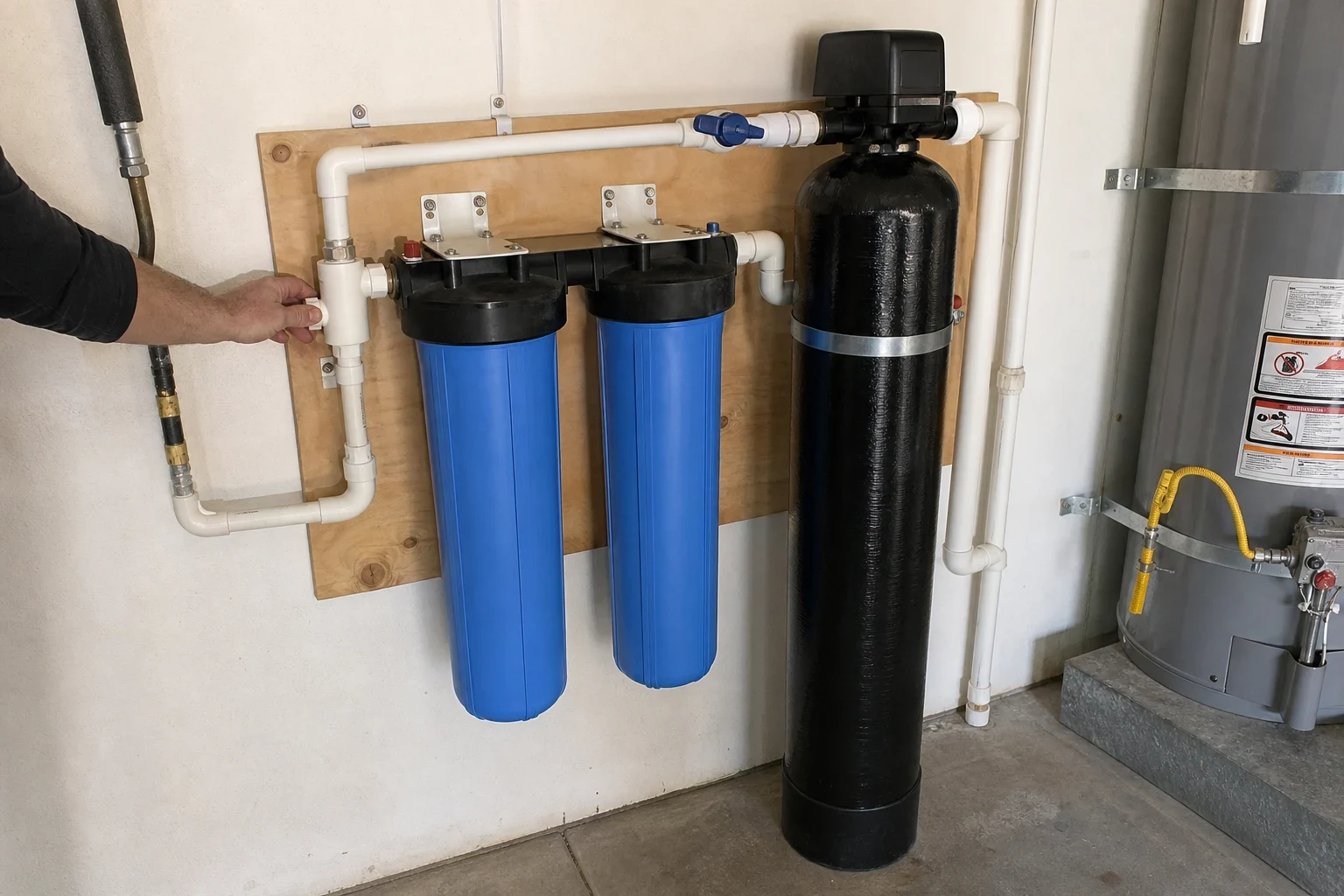
We find a sensible spot near the main line, usually in the garage, and install a bypass valve so outdoor spigots and the unit itself can be isolated when needed.
- 04
Drain and brine setup
The drain line gets a proper air gap, and we fill and set the brine tank before the first regeneration.
- 05
Programming and a walkthrough
We set the control head for your hardness, show you how to add salt, and explain what the display is telling you.
Questions about Water softeners?
Call(972) 428-3132Signs a hardness test is worth doing
White crust on faucets and showerheads
Chalky buildup that scrubs off slowly is classic scale. A test tells you whether it's heavy hardness or occasional mineral spotting.
Cloudy glassware after the dishwasher
A film that returns load after load points toward hard water, though detergent and rinse aid can play a part too.
A water heater that rumbles or pops
Scale settling in the tank makes noise and cuts efficiency. Hardness is a common cause worth confirming.
Soap that won't lather
Hard water reacts with soap and leaves skin and hair feeling dull.
An old softener acting up after a storm
A power outage can reset the timer, and floodwater near the brine tank can contaminate it. We can check whether your unit is still running right or whether your water even needs it.
How a softener visit goes
- 1
Test at the tap
We draw a sample, measure hardness and iron, and show you the results on the spot. This takes a few minutes, not an afternoon.
- 2
An honest recommendation
If the numbers support a softener, we explain the size and type that fit. If they don't, we tell you so and suggest what would help instead, such as water testing by an outside lab for a fuller picture.
- 3
Installation day
We shut off the water briefly, tie the softener into the main line, add the bypass and drain, and protect the floor where we work. Most homes go without water for only part of the visit.
- 4
Startup and cleanup
We run the first regeneration, check for leaks, retest the softened water, and clear away packaging and old fittings before we leave.
What affects the cost of a softener
We give you a written, line-item estimate once we know your hardness and have seen where the unit will go. The price comes from your water and your plumbing, not a package. Nothing is added after the fact without a conversation first.
- Hardness level and household size
- Harder water and more people mean a larger resin capacity, which affects the unit you need.
- Iron in the water
- If iron is present, you may need a pre-filter or a resin rated for it, which changes the setup.
- Plumbing access
- An easy loop near the main line keeps labor down. Rerouting pipe or running a long drain line takes more time and material.
- Replacing an old unit
- Removing and hauling away a failed softener, or repairing storm-damaged lines around it, adds to the job.
Water softener questions
Do I really need a softener, or is this a sales visit?
It's a test visit first. If your hardness reading is low, we'll say so and won't push a softener. Many spotting problems turn out to be iron or sediment, which call for a different filter.
Will softened water taste salty?
At typical hardness levels, most people don't notice a salty taste. If you're watching sodium, potassium chloride can be used instead of salt, or you can drink from an under-sink reverse osmosis faucet.
What happens to my softener after a power outage?
Many control heads lose the time of day and may regenerate at the wrong hour. Older units can lose their settings entirely. If you're unsure after a storm, we can check the programming and the brine tank.
How much upkeep does a softener need?
Mostly adding salt every few weeks and keeping an eye out for a salt bridge, a hard crust that stops the brine from forming. Our filter replacement and maintenance service can handle periodic checkups if you'd rather not.
Should I water the lawn with softened water?
It's better not to. We usually plumb outdoor spigots ahead of the softener so your yard gets untreated water and you don't use salt where it isn't needed.
Learn what your water really calls for
One short hardness test answers the question. If a softener is worth it, we size it correctly and walk you through each line of the estimate.