ServicesIron and sediment filtration
Lancaster Iron and Sediment Filtration
Rust rings in the toilet bowl, sand in the faucet screen or brown water after a storm all have a cause. We figure out what is in your water and where it starts, then install a filter that catches it before it reaches your fixtures and laundry.
What this filtration does and when it makes sense
Iron and sediment are two different problems that often travel together. Sediment is the solid stuff you can see: fine sand, silt, flakes of scale or rust from old pipe. Iron can be dissolved and invisible coming out of the tap, then turn orange once it meets air and settles onto sinks, tubs and white towels.
Sometimes the cause is temporary. Heavy storms, hard freezes and water main repairs can stir up the lines for a day or two, and the water clears on its own. Other times it keeps coming back because of aging galvanized pipe, a private well or a water heater full of sediment. We help you tell the difference first, so you only buy equipment for a problem that is actually staying.
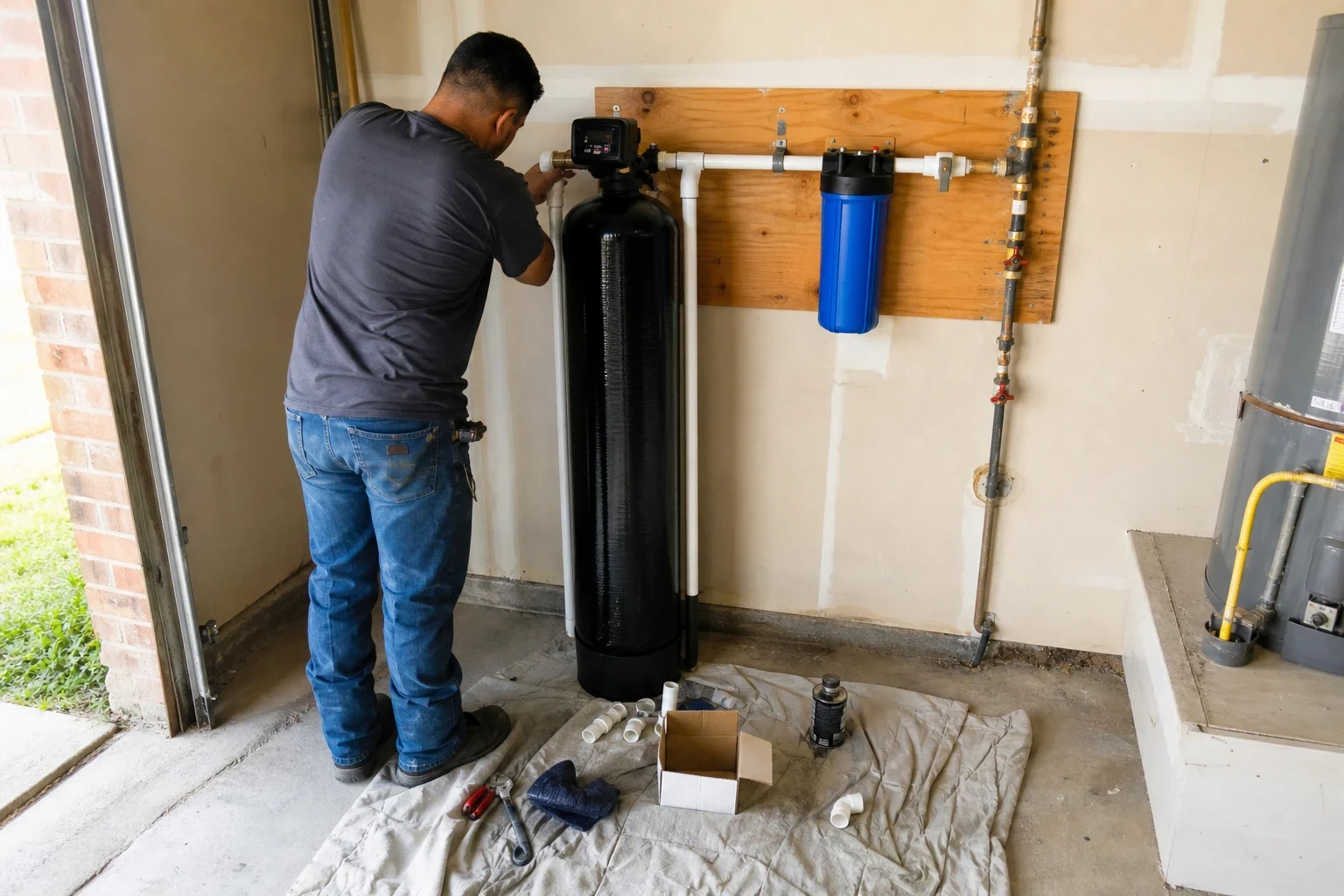
When a filter is the right call, it goes on the main line where water enters your home. Every tap, shower and appliance downstream gets the cleaner water, and your fixtures, washer valves and water heater stop collecting grit.
What the work includes
- A water test before any recommendation
- We check iron level, manganese, pH and how cloudy the water is. Those numbers decide whether a simple sediment filter will do or whether you need an iron filter. You get the results explained in plain words.
- Sediment filter sized to your flow
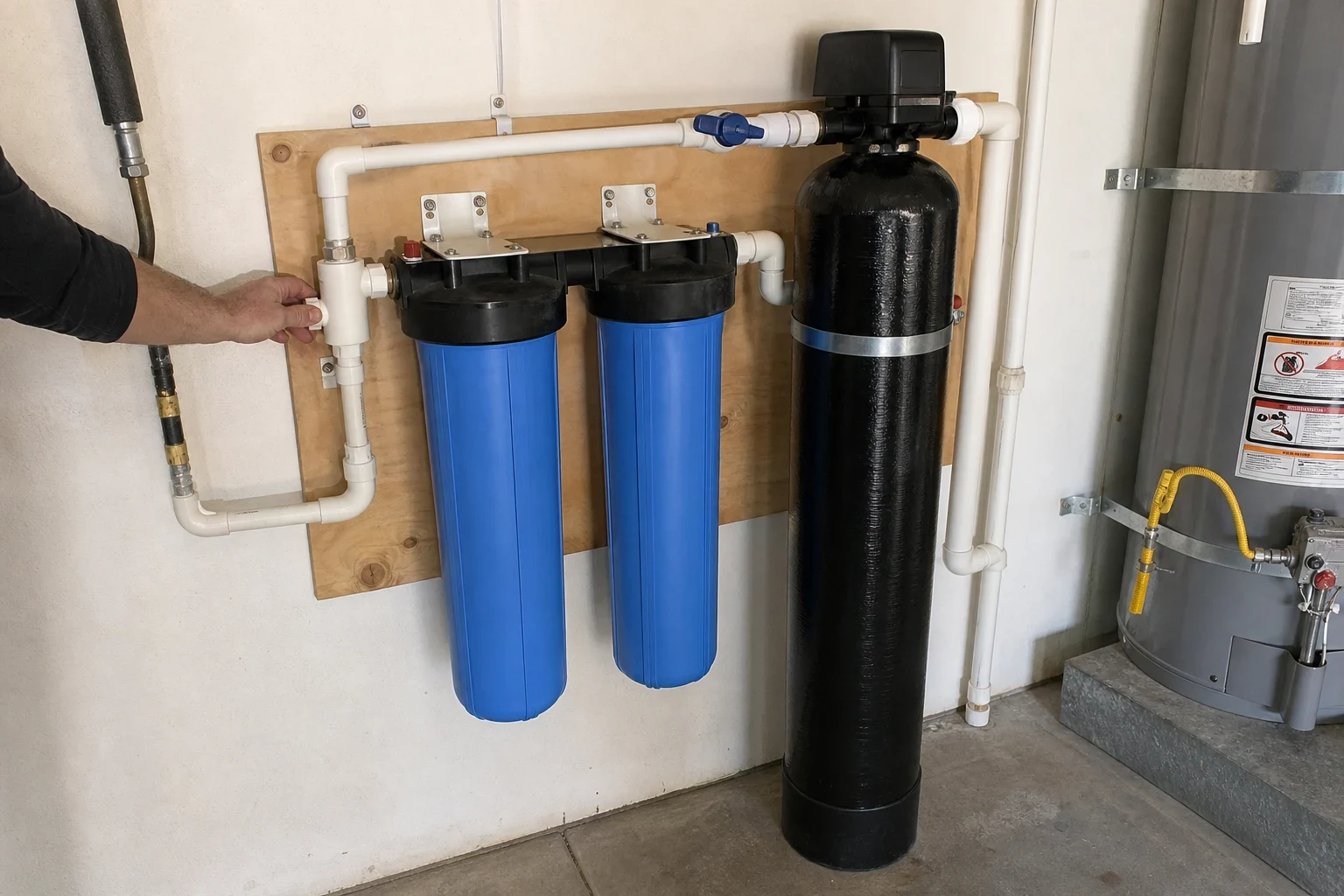
- For grit, sand and scale flakes, we install a spin-down screen, a cartridge housing or both, with a micron rating matched to what we found. Sizing it to your home's flow keeps shower pressure where you expect it.
- Iron filter for higher iron levels
- When iron is high enough to stain, a backwashing filter with oxidizing media pulls it out and flushes it to a drain on a set schedule. We plan the drain line and power outlet before install day.
- Bypass valve and pressure gauges
- We add a bypass so water keeps flowing during service, plus gauges on either side of the filter. When the gap between them grows, you can see the cartridge is ready for a change.
- Cleanup and a walkthrough
- We flush the system, check for leaks, clear away packaging and show you how to read the gauges and use the bypass.
Signs iron or sediment is getting into your water
Orange or brown stains
Rust rings in toilet bowls, streaks under faucets and stains on the shower floor point to iron. Bleach tends to set the stain rather than lift it.
Clogged aerators and showerheads
If you keep unscrewing faucet screens and finding sand or dark flakes, sediment is moving through your pipes.
Laundry turning dingy
Whites that come out yellowish or with rust spots usually mean iron in the wash water, not a problem with the machine.
Brown water that keeps returning
Discolored water after a storm or line repair is common and often clears. If it comes back week after week, the source is likely in your plumbing or supply, and it is worth testing.
Metallic taste or cloudy glasses
A tinny taste or a haze that settles to the bottom of a glass can come from iron or fine silt.
How a visit goes
- 1
A conversation by phone
You tell us what you are seeing, when it started and whether anything changed recently, like a storm, a freeze or plumbing work. Sometimes we can suggest a simple flush and wait first.
- 2
Testing at your home
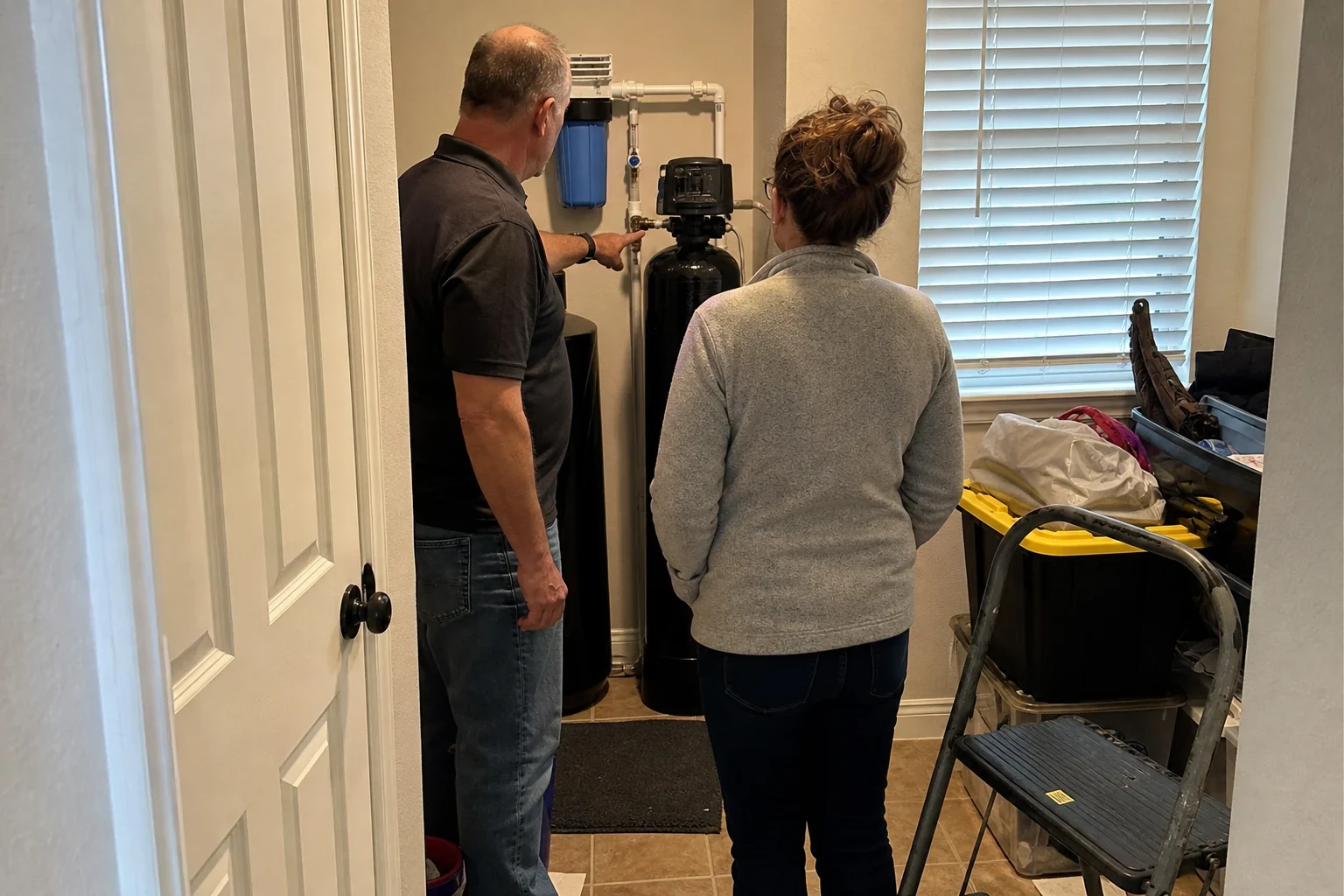
We sample your water, look at the main line, the water heater and any older pipe we can reach, and talk through the results with you on the spot.
- 3
A written estimate
If a filter makes sense, you get a written estimate that lists the equipment, the installation work and any ongoing cartridge or media costs. No pressure to decide that day.
- 4
Installation day
We shut the water off for a short window, install the filter and bypass at the main line, then flush and check every connection. Most homes are back to normal water before we leave.
What affects the cost
The price depends on what the test shows and how your plumbing is laid out. A home with occasional grit needs far less equipment than one with steady staining iron. We go over each line of the estimate with you so nothing on the bill is a surprise.
- Type and amount of iron
- Sediment alone can often be handled with a screen or cartridge. Dissolved iron at staining levels calls for a backwashing filter, which costs more up front.
- Your home's size and water use
- More bathrooms and higher flow mean a larger housing or tank so pressure does not drop when two showers run at once.
- Where the main line is
- An easy-to-reach line in a garage takes less time than one tucked against an exterior wall or behind finished space. Iron filters also need a nearby drain and outlet.
- Ongoing upkeep
- Cartridges need regular changes, and some media need periodic service. We include these costs in the estimate so you know the full picture.
Questions about iron and sediment filters
Something not covered here? (972) 428-3132
My water turned brown after a storm. Do I need a filter?
Not necessarily. Storms, freezes and main repairs often stir up sediment for a short time. Run the cold tap for a few minutes and hold off on washing whites. If it does not clear within a day or two, or it keeps returning, that is when testing is worth it.
Can a water softener remove iron?
A softener can handle small amounts of dissolved iron, but higher levels foul the resin and shorten its life. We only suggest a softener after a hardness test supports it. If iron is the main issue, a dedicated iron filter usually does the job better.
Will a whole-house filter lower my water pressure?
A properly sized filter has very little effect. Pressure drops mostly when a cartridge is clogged and overdue for a change, which is why we add gauges you can check.
How often do the filters need changing?
It depends on how much sediment your water carries. Some homes change cartridges every few months, others less often. Our filter replacement and maintenance service can keep track of it for you.
Will this fix chlorine taste or smell?
No. Iron and sediment filters target particles and iron, not chlorine. For taste and odor, whole-house carbon filtration is the better fit, and the two often work well together.
Let's find out what is in your water
Tell us what you are seeing at the tap and we will help you decide whether to wait it out, test or filter. You get a straight answer and a clear plan.